



 SEARCH

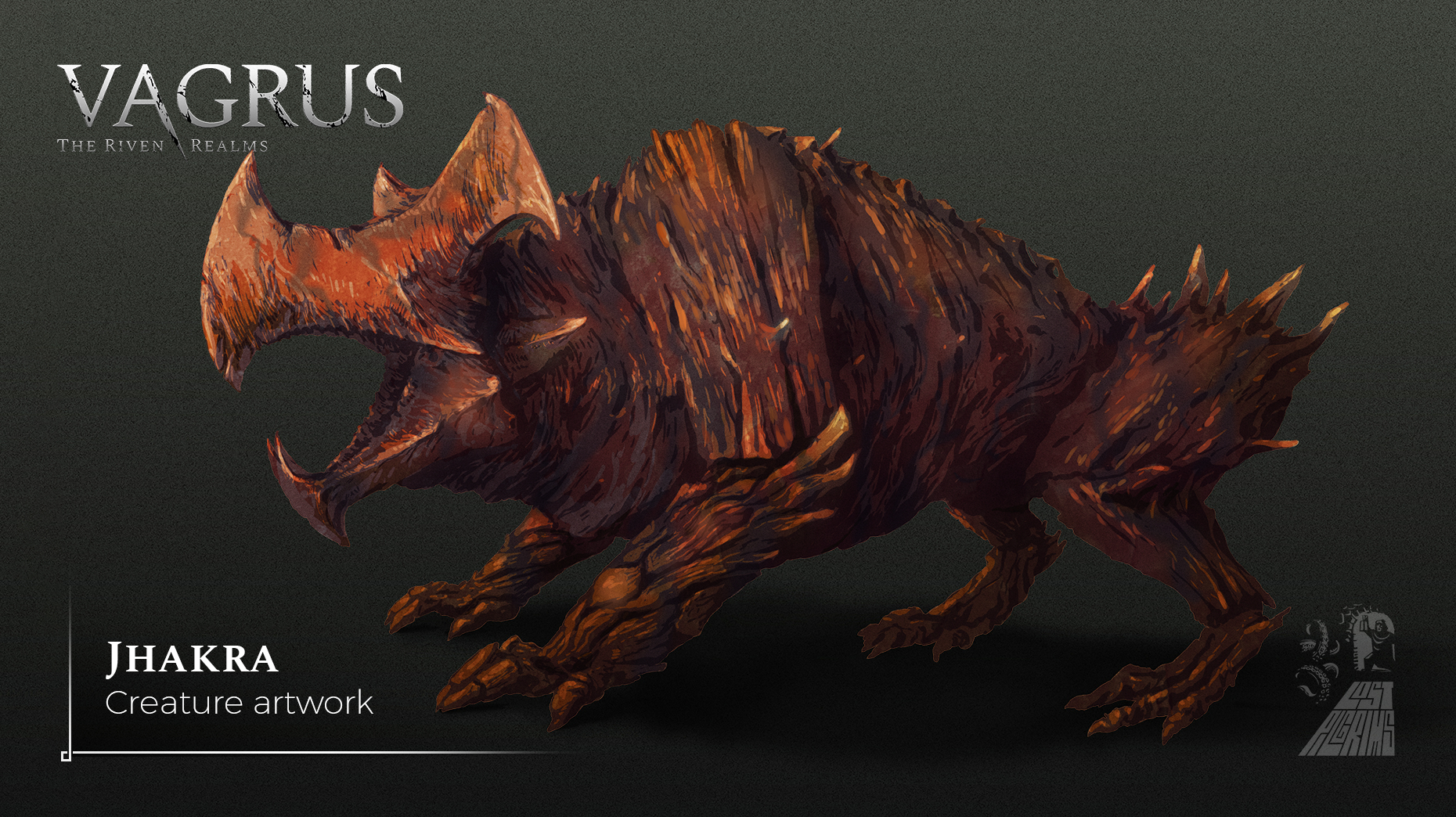
The next artwork and creature description is of the Jhakra, a pestilence of the desert:
Jhakras are four-legged reptilians covered in hardened, yellow-brown, grown-together scales. Adult specimens are 1 meter tall and grow to 1.5-2 meters long. Their legs can propel them forward quite fast, but it is difficult for the creatures to maneuver. Males sport forward-protruding and side horns they use to mauling and tackling. Jhakra have well-hidden, tiny eyes to protect them when they melee or charge. Because of this they don’t see too well. However, their sense of smell is extraordinary, making them able to follow prey for miles.

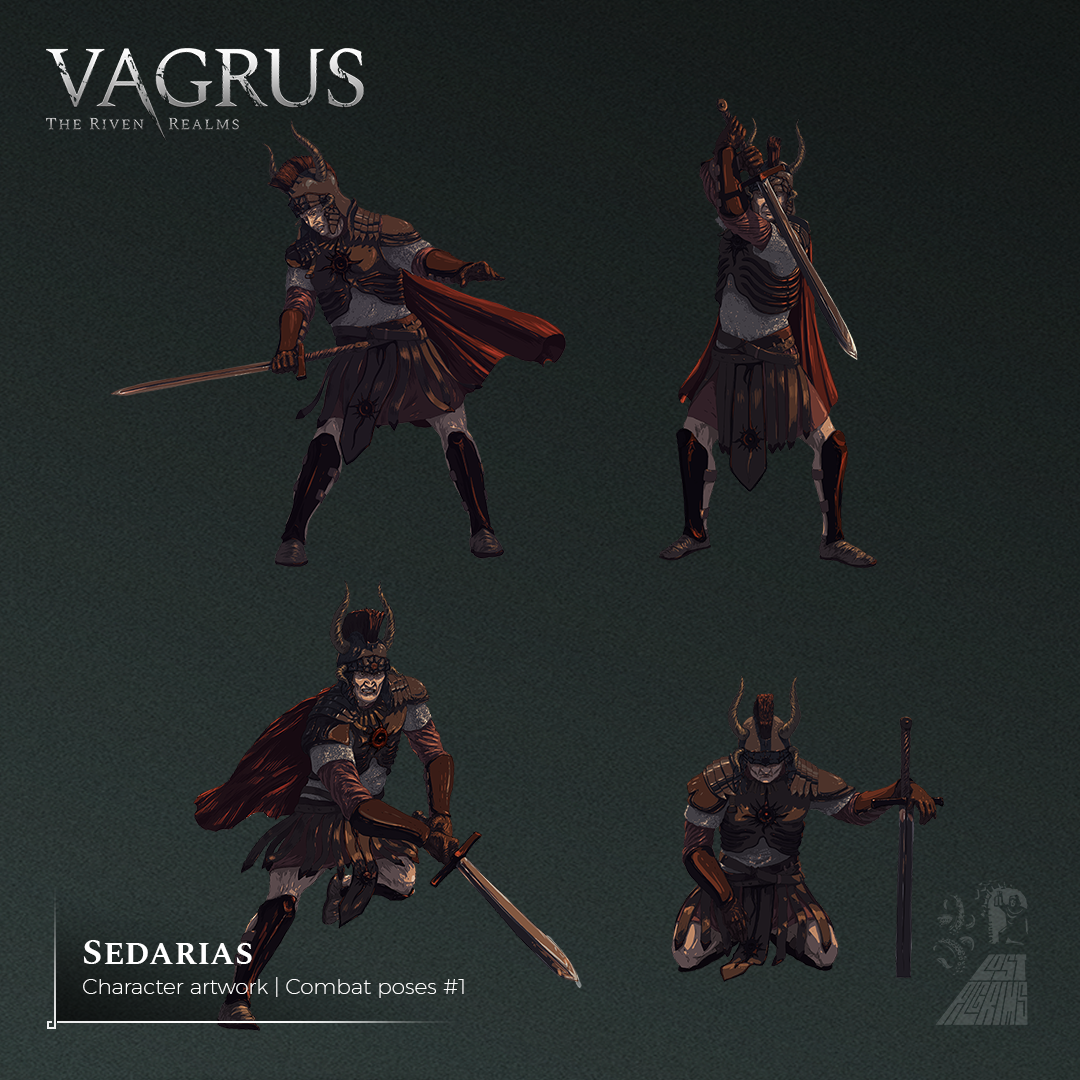
As we are adding more and more characters to the game's combat, we thought you might be interested in how they appear there.
Anything a given character can do in combat (like blocking or dodging, being hit, attacking or using various skills, and even standing idle) has an assigned artwork (a sprite) that appears when that action is performed.
These two images here show some of the action sprites Sedarias has. Some powerful two-handed sword swings make up his offensive abilities, augmented by Bane (a curse he can cast on opponents).
#art #character #orderoftheblacksun #projectupdate #sedarias
The amazing Bazsó Lossonczy works on a number of character designs for Vagrus. In this video, you can witness (in an enhanced time-lapse) how he goes from design sketches through primaries to the finished state of a character artwork for the Cinderborn, an enemy that is a particularly intimidating one, something right up Bazsó's alley. :)
As we promised few weeks back, we have put a significant effort into improving our hero combat and we are now happy to present you, dear patrons, an update on how far we've got.
Most importantly, we created a new UI and removed the placeholder at the bottom of the screen.
We have also added new characters and skills that they can use. Like in the second example, Sedarias strikes two Charred corpses at once with his Cleave skill.
Here's a small taste of what kind of enemies the player is going to face in Vagrus. Enjoy!
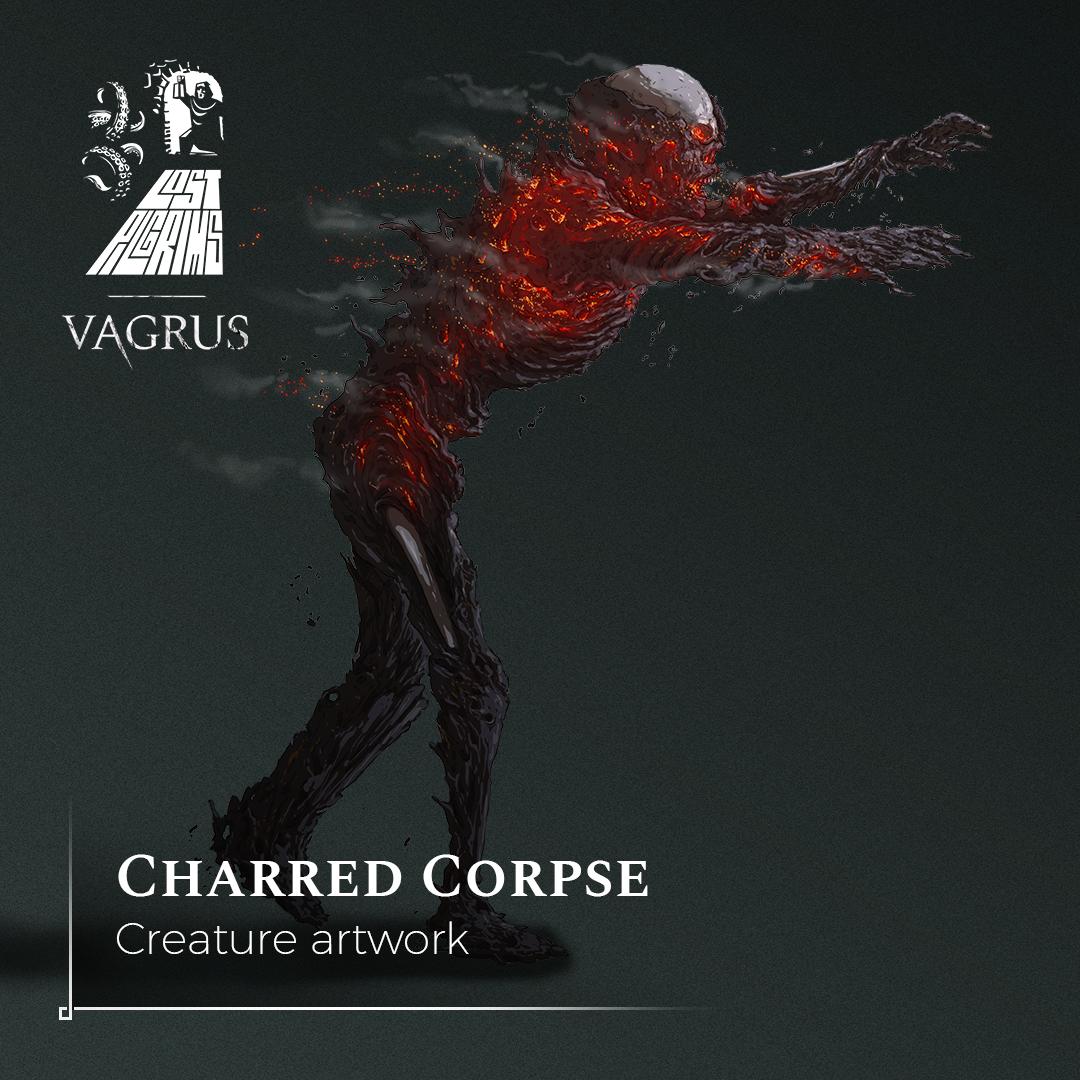
Many forms of undead have existed all around the continent of Xeryn ever since the Calamity. One of the side effects of the magical cataclysm is that in some places, the dead don’t rest in peace, but walk among the living. Much of this threat is dealt with by Imperials, but some remote areas are still constantly plagued by the undead. One such area is the Molten Tongue and Dvendar Tharr, the former kingdom of the Dwarves, where shuffling, burnt corpses rise to kill indiscriminately.
These charred corpses are in various degrees of degradation, but all show signs of burning (as well as other traumas). There is still some flesh that cling to their bones on most of them, albeit burned and charred. They are completely mindless, attacking living beings on sight. It is remarkable that no Dwarven corpses are reanimated in this way, suggesting that the curse could have some kind of connection to scavengers or the disturbing of the dead kingdom by outsiders. Cinderborns attack by mauling, clawing, and biting, and often fall apart quite easily.
Time for some combat, don’t you think? :)
We’re proud to present this short video that demonstrates how turn-based combat will work in Vagrus. Just a sneak peek, mind you, but in the following weeks we’ll be showing more.
Note that this is a very early version and a lot is bound to change, but it should give you a general idea nonetheless. Enjoy!
Here's a second look of how the comitatus (caravan) led by the vagrus (the player) moves on the world map. It is still pretty early stuff, a lot can and will change, but it should give a good idea of how things will work. A few thoughts on the movement mechanics that might further clarify what you can see in the video:
#comitatus #ingamefootage #mapmovement #movementpoints #prealpha
From the very first moment in art design and development for Vagrus, we knew that the game world's haunting, post-apocalyptic beauty is key to conveying the atmosphere we want to create. Of course, that may not be saying much, since most games today rely heavily on visuals, it comes with the genre. More specifically, the challenge was to convey the right kind of atmosphere and find the art style that is perfect for that. We agreed soon that cartoon-like or pixel art would not do, nor would any other more stylized imagery. We settled upon the more realistic, but painting-like look, which gives a feeling almost akin to observing an old and faded piece of classical art. The other challenge was that the world of Vagrus has been a living and detailed environment for a long time now, so often our fantastically talented artists have to follow very specific directions on certain elements of an image.
BUY NOW ON


or follow us on



 Follow the development process:


©2024 Lost Pilgrims Studio


