



 SEARCH

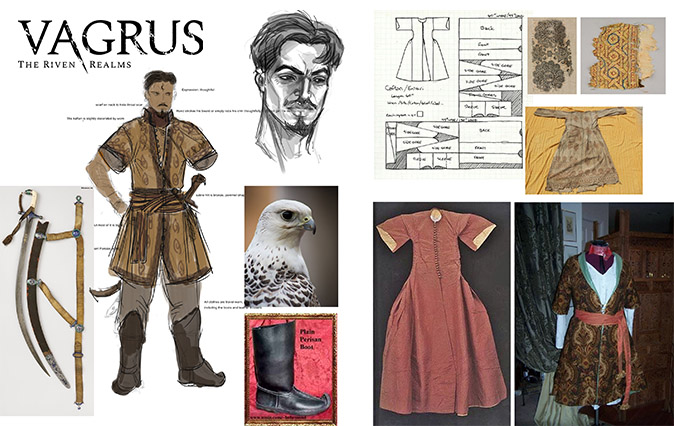
In Character design - Part 1 we talked about the types of characters in Vagrus, focusing especially on Companions and their roles in the game. Now it's time to move onto the topic of what exactly goes into the graphic design phase of these characters.

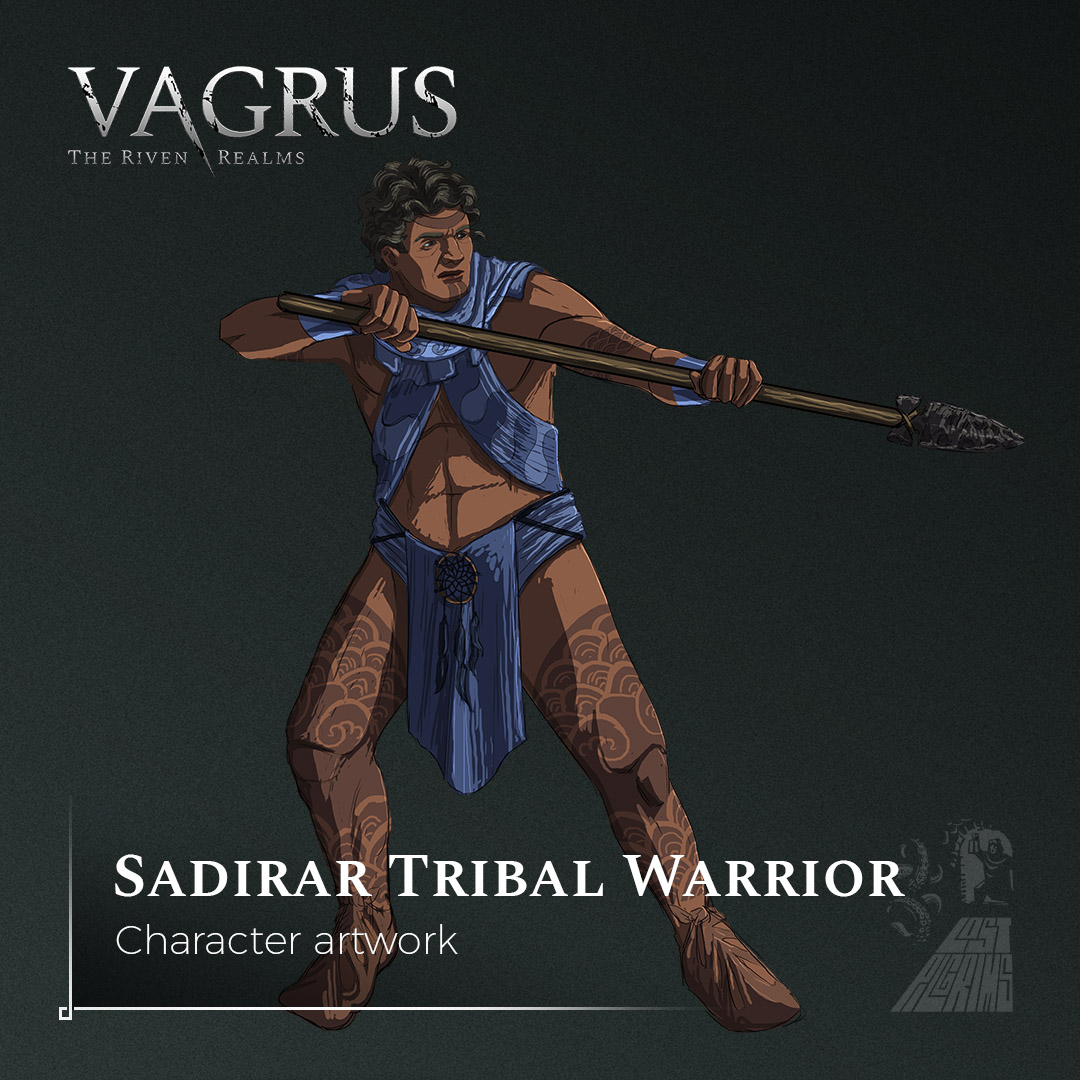
The new enemy character (that can also be an ally sometimes) you can see above is the tribal warrior of the Sadirar. These brave people are trackers, hunters, desert guides, and of course, capable fighters. Their only weapon is a spear, so in combat against tough opponents, they prefer to have superior numbers or support from their elemental shamans; or both.
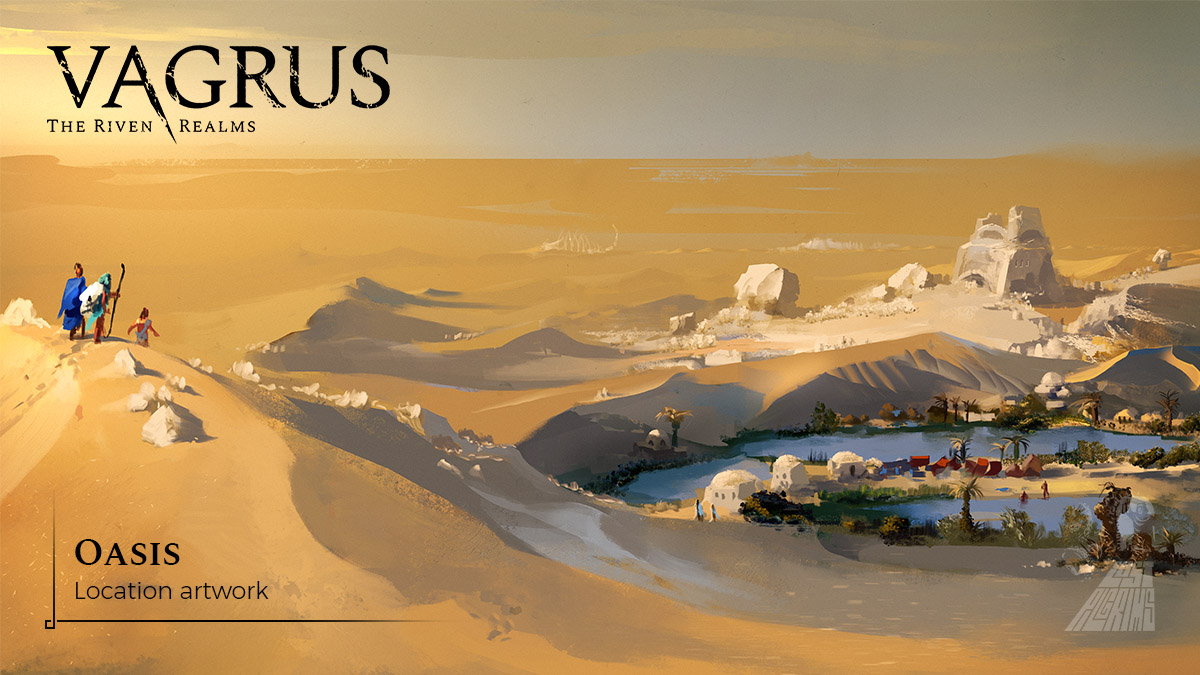
A lot of the Riven Realms are endless wastelands and deserts. Yet even in the deadliest of deserts, some life remains; thrives even. Most of that life tends to be found around an oasis.
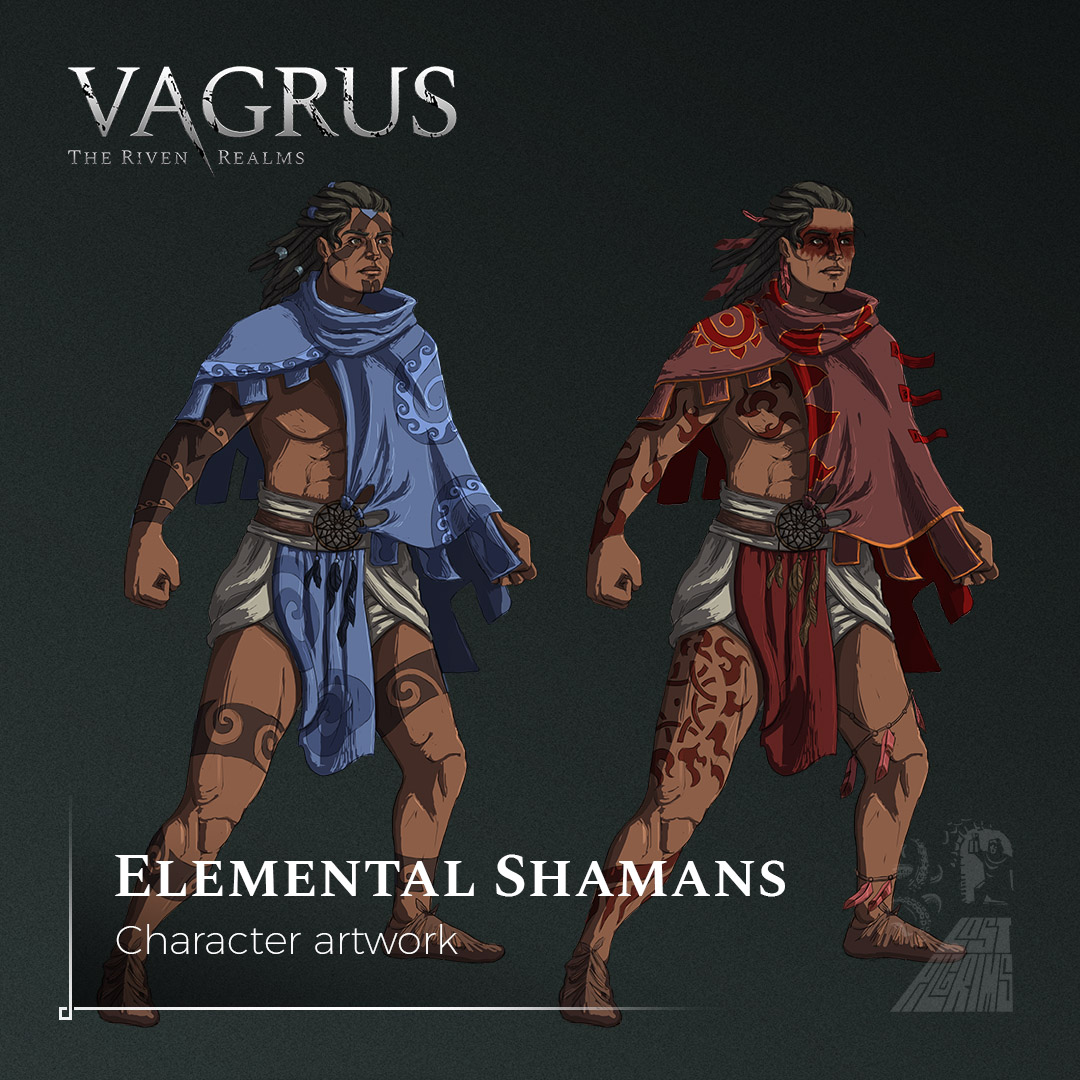
The next character to be revealed is another enemy, although this one can often be encountered as a temporary ally as well: the elemental shaman of the Sadirar people.
The ancestors of the Sadirar survived the Calamity in underground vaults and left those several generations after the catastrophe. Upon going back to the surface, they found endless sand dunes, blinding sunlight, and searing temperatures in place of their dense forests and hills. In their hour of despair, however, the Great Spirits spoke to them and guided them to oases in the cruel desert. These spirits have been worshiped by the Sadirar ever since. Each spirit is the embodiment of an element: Fire, Water, Earth, and Air. Those that communicate with the Great Spirits and in turn command these elements are the shamans. The Sadirar are now a nomadic people who thrive in the deserts called the Searing Plains. They rose above cruel barbarism through spirit worship but are far from docile.
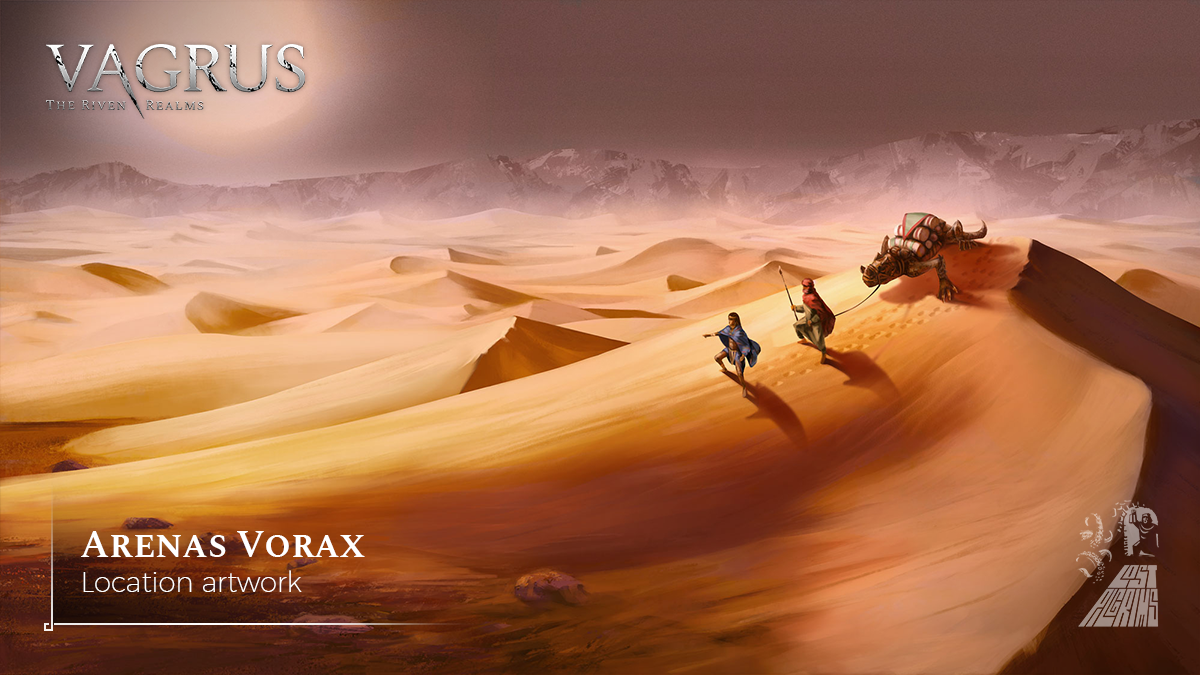
One of the largest continuous desert areas on a continent of many deserts, the Searing Plains spans several provinces that used to be forested regions and fertile plains before the Calamity, but became scorching hot and arid lands of sand dunes and little else. Some parts of the plains have low mountain ranges, rock gullies, or ravines, but, yellow sand dunes and salt flats remain the most common features. A constant, hot wind blows from the East and North, creating sandstorms regularly.
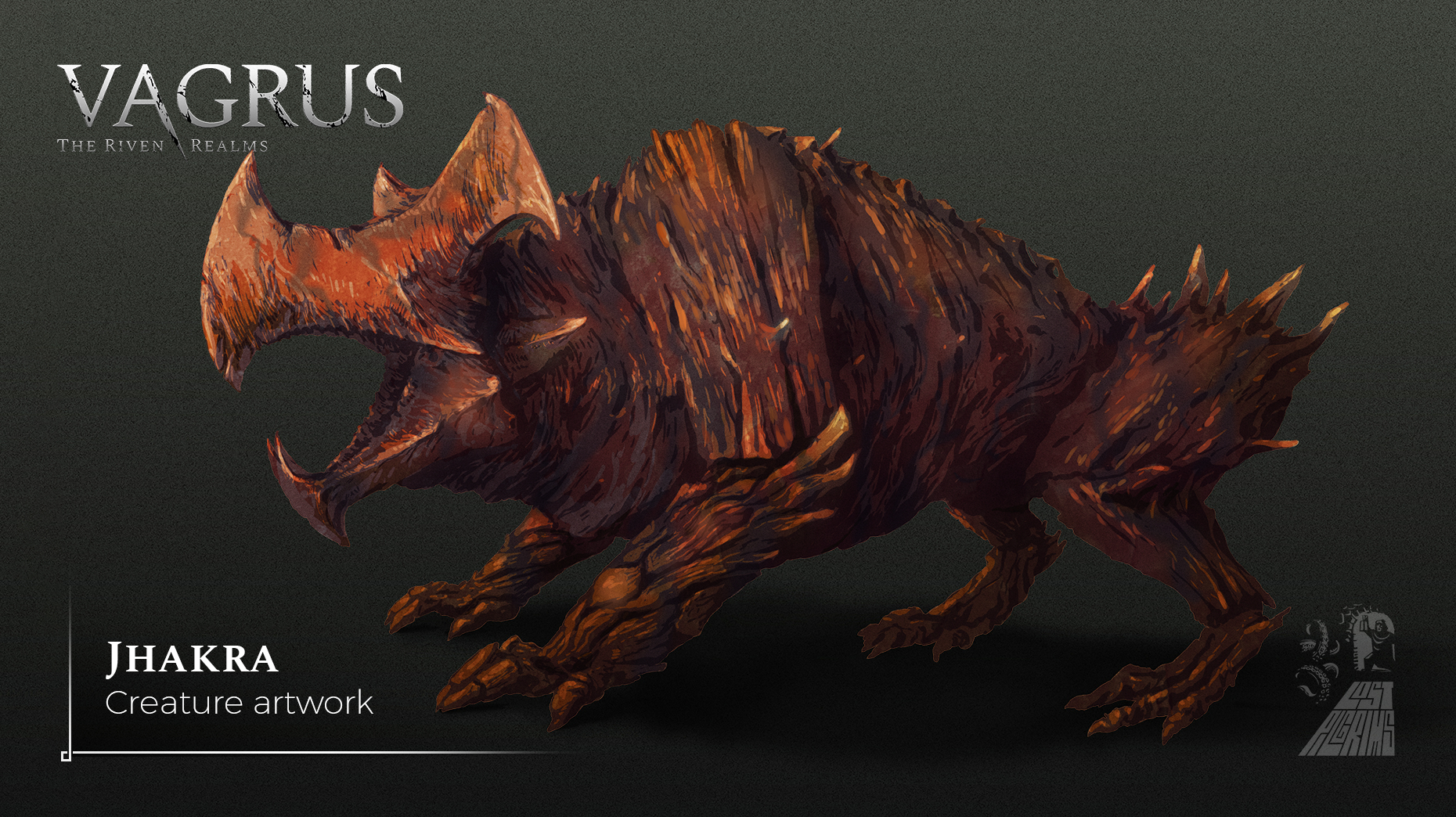
The next artwork and creature description is of the Jhakra, a pestilence of the desert:
Jhakras are four-legged reptilians covered in hardened, yellow-brown, grown-together scales. Adult specimens are 1 meter tall and grow to 1.5-2 meters long. Their legs can propel them forward quite fast, but it is difficult for the creatures to maneuver. Males sport forward-protruding and side horns they use to mauling and tackling. Jhakra have well-hidden, tiny eyes to protect them when they melee or charge. Because of this they don’t see too well. However, their sense of smell is extraordinary, making them able to follow prey for miles.
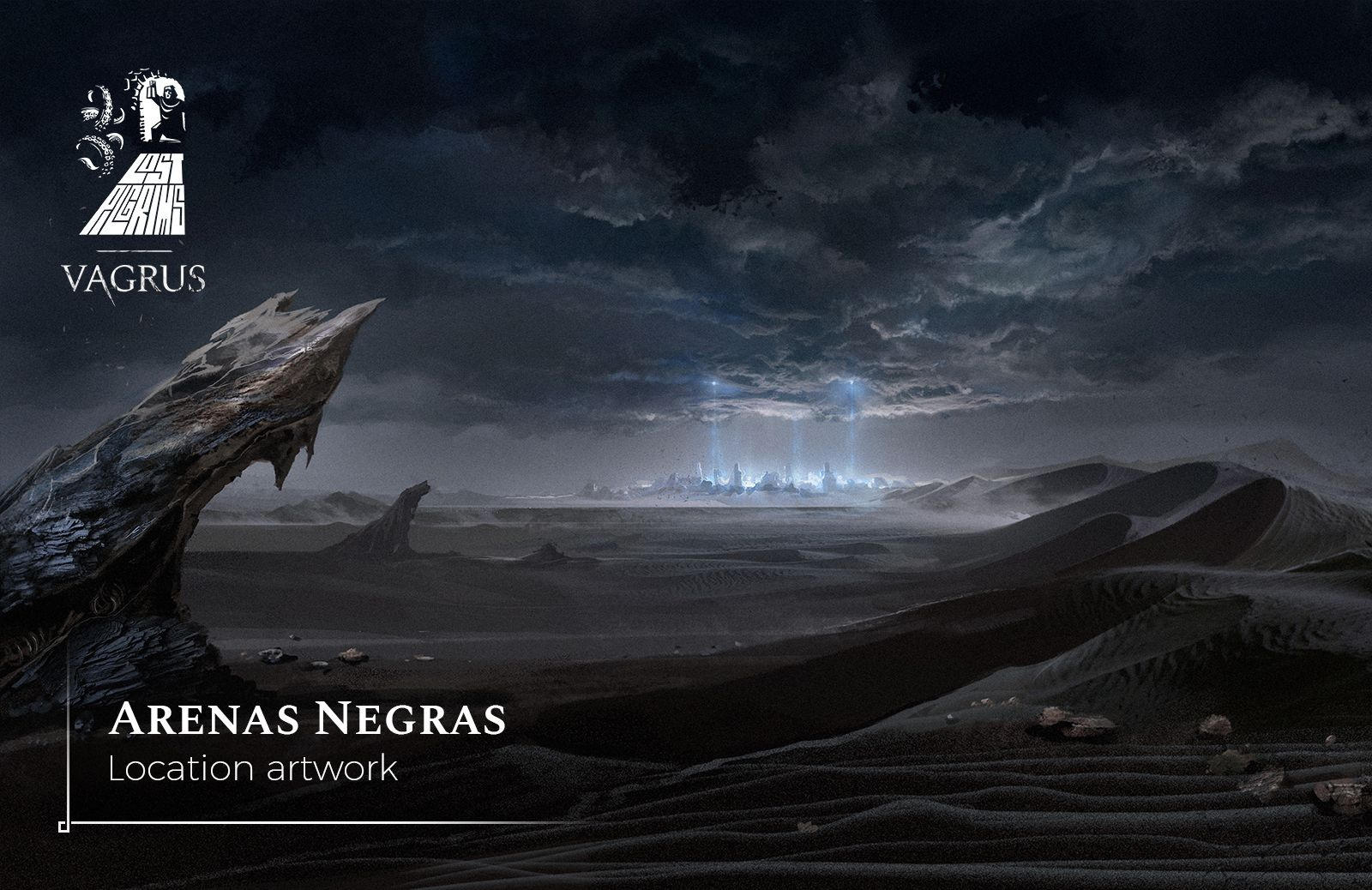
Called the Desert of Black Sands, or the Black Desert (Arenas Negrasin the Imperial language), this vast, empty desert that has fine, black sand instead of any other color is probably one of the most ill-reputed places of the post-Calamity era. Nothing lives here, not even insects. The silence is deafening. People who enter the desert and stay for a while usually inexplicably disappear. In the center of the area is a terrible place, supposedly the source of all evil in the region: The City of the Dead, Arx Mortis.
Formerly the capital of the Sanvorati province and previously known as the Shining City, Calderum was made into its own horrible caricature by the Calamity. These days, Arx Mortis is a dead place filled with eerie moaning and groans, cast in perpetual twilight, beset by bone-chilling cold and a pale, frigid light emanating from the faded rocks that are almost all that remain from the once beautiful buildings and walls. Now these stand vacant and hollow, often reminding visitors of broken teeth peeking out of black gums.
BUY NOW ON


or follow us on



 Follow the development process:


©2024 Lost Pilgrims Studio


