



 NEWS
NEWS

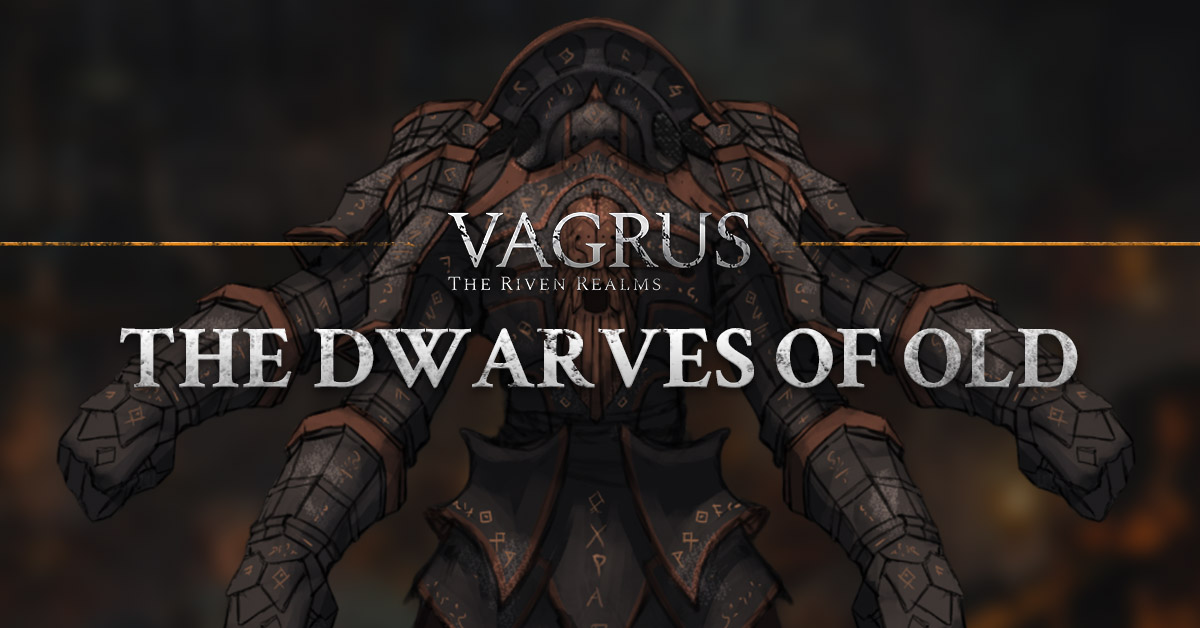
This week we’re coming to you with more lore relating to the Dwarves of the Riven Realms and their lost culture. We’re set to delve deep, as this lore is becoming increasingly relevant for those currently enjoying our At the Heart of Ruin expansion, and who anticipate the updates of its ongoing story. Not to mention, of course, that Vagrus has always been aimed toward the discerning lore-enjoyer, and what’s coming will be no different.
One thing that becomes clear quickly upon visiting the ruins of Dvendar Tharr is that the lost kingdom is a tomb for Dwarves of the Third Age. Remnants of their grand architecture are spread throughout the cracked land and, as one swiftly finds out, below it as well. Vast subterranean realms sprawl below and within the mountain, and for those who go looking, they are almost always inhospitable.
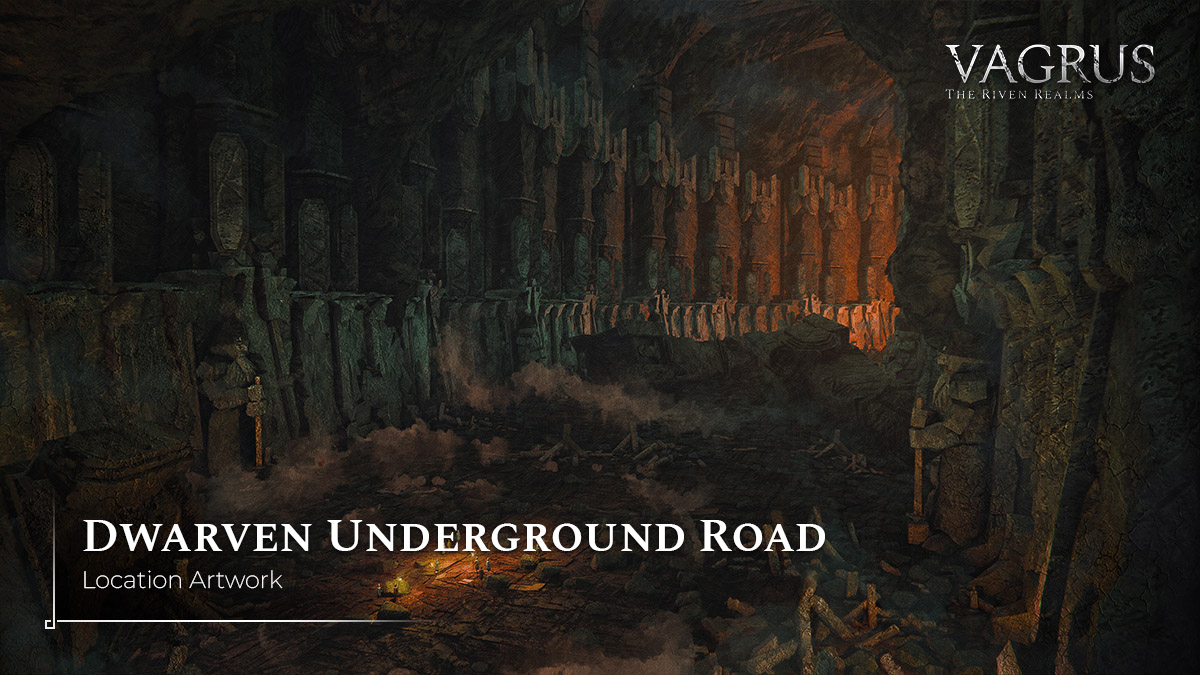
The one thing that is perhaps a bit obscure about Dvendar Tharr is how incredibly diverse Dwarven culture used to be in the kingdom’s confines. During most of the Third Age, several Dwarven cultures coexisted under one High King, all of them favoring different architectural styles, religious practices, material culture, and social stratifications. Each had different clan structures and traditions, which often merged and shifted as clans became unified through politics or internal strife.
One example of such a culture can be found in the coastal Dwarves of the west, whose cultural center was the harbor city of Dum Vurdanthos. Regarded in their day as crafty sailors and fearless adventurers, the clans in the area were traditionalists – even more so than most other Dwarves. They voyaged far and wide, discovering lands and sea lanes well past the reach of the other races. The influx of treasures and trade goods their seafaring brought made the coastal clans rich beyond reckoning. Dum Vurdanthos, the now sunken city, was once a magnificent port, the western gateway of Dvendar Tharr. Many a famed explorer began his path there, launching expeditions and voyages that brought them status and wealth.
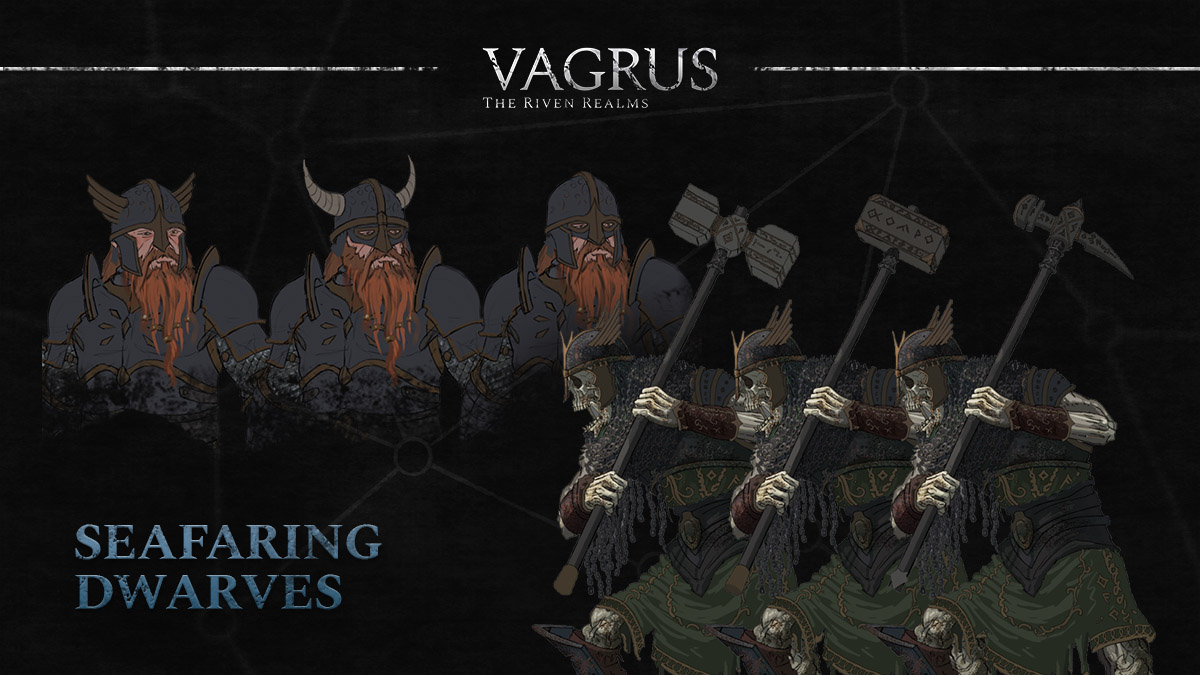
The coastal Dwarves favored horned or winged helmets alongside chainmail armor. The only area in which they were open-minded was shipbuilding, but even there, many generations had to pass before the Guild of Shipwrights accepted even the smallest change to their craft. Another faction, the navigators, were peerless during the Third Age in their skill, and they taught many other people who visited their great port. Allegedly, their runed sextants and elaborate spyglasses surpassed even those crafted by the Elves, masters of the seas by all accounts. Their ships were sturdier than Elven or Human ones, and they only fell behind in nautical exploration toward the end of the Third Age, when the Empire began to overshadow all other realms in basically every possible area.
In contrast, the Dwarven clans of Dum Khazvar focused heavily on displays of military prowess, training armies, and even – at least at certain points in history – conquest. In ancient times as far back as the Second Age, the fortress city guarded the eastern way into the kingdom, and so the High Kings tended to grant it to the most talented and successful warlords. Thus, a strong warrior culture took root and remained until the Calamity wiped Dvendar Tharr away in a single day. Even now, remnants of many of their strongholds and bastions stand, a testament to the sturdiness of their fortifications.
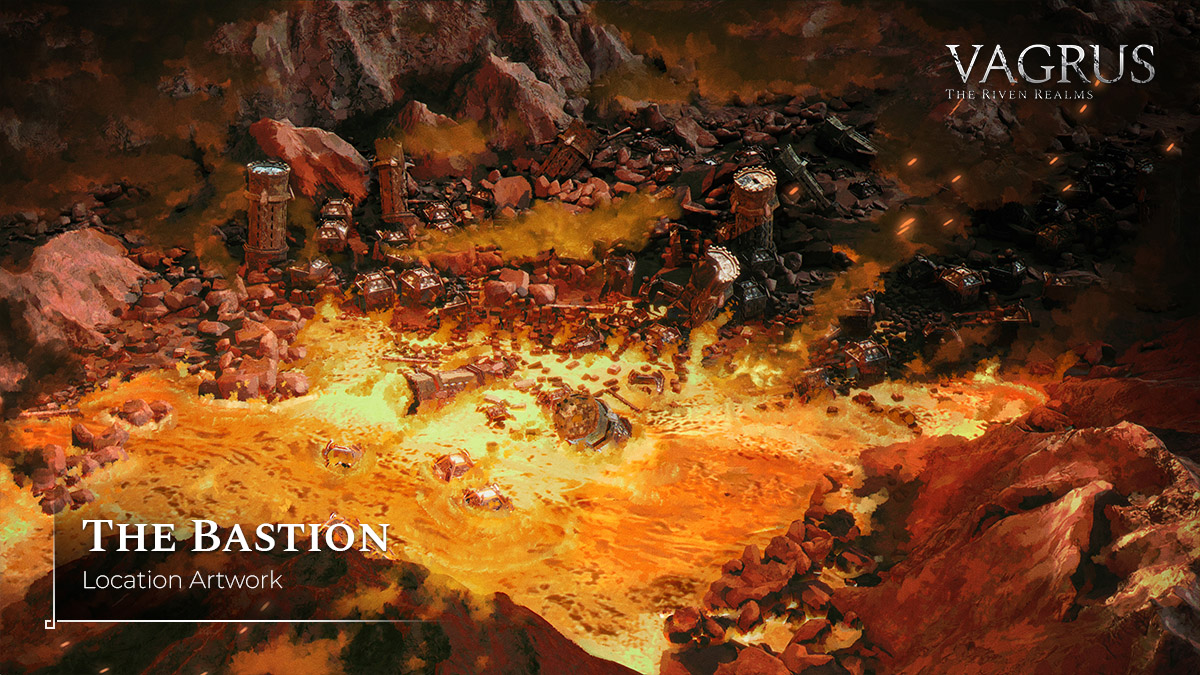
Yet, before cataclysm marred their mighty works, the clans of Dum Khazvar were the stalwart shield and unstoppable hammer of the Dwarven kingdom. After the many threats in their vicinity were laid low during the Second Age, however, they became guardians – the protectors of Dvendar Tharr writ large. Blacksmithing and even runeforging blossomed in the halls of the mountain hold, and Khazvarian armaments were thought to be the best in all the realms.
Toward the end of the Third Age, Dwarven culture shifted noticeably: it changed with the rise of the Inventor Kings, a new dynasty that took over rulership just as Dvendar Tharr became closely allied with the Empire. Concerned primarily with technological and scientific progress, these sovereigns valued ingenuity and innovation most. Without a doubt, the focus on these areas – along with the encouragement of open policies toward other powers – brought with it unprecedented progress, though in turn it antagonized traditionalist factions. With a critical mass of Dwarven society swept up in the wave of change, however, the Inventor Kings altered age-old traditions. New kings were now chosen based on scientific achievement alone, which propagated changes and experimentation in various aspects of life and technology.
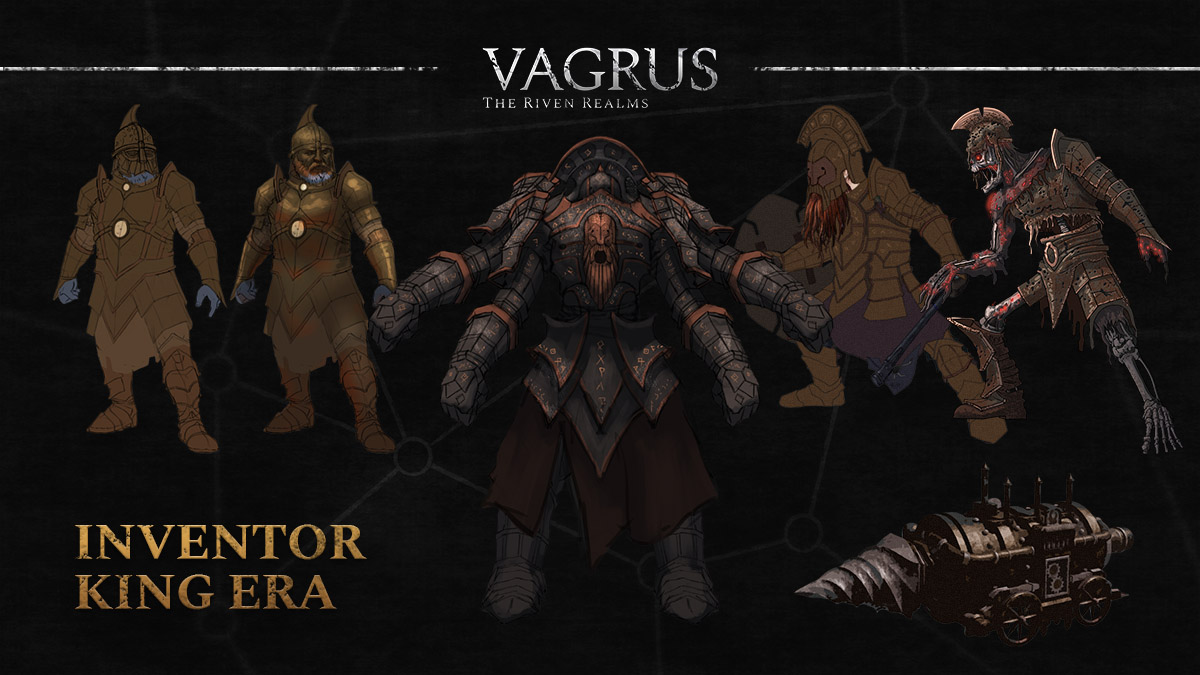
Suits of armor and weaponry worn by Dwarven warriors represent this sudden spike in advancements, while also showing how several branches of technology and rune magic were synthesized in an almost industrial manner to reach new heights. Engineering was an especially advanced area; the Dwarves revolutionized mining, construction, manufacturing, and transportation with new, complex machinery using gears, steam, and runes. From such heights, the fall was ever more painful. The handful of surviving Dwarves of present-day Riven Realms are, by and large, disillusioned with both their past and their future, and are a far cry from their inventive ancestors.
Undeniably, one of the greatest achievements of the Third Age Dwarves was the grand city of Quathos, once the seat of cross-cultural collaboration and of the Inventor Kings, a beacon of inspiration for countless souls. Dvendar Tharr wished that its sovereigns spearhead the ushering in of a new age, one replete with advancement based on Dwarven, Elvish, and Imperial cooperation, and envisioned a future brighter than ever. By all surviving accounts, Quathos was a true wonder – its buildings reached the skies, its grandeur was astonishing, and its monuments were a testament to the greatest cooperation of history.
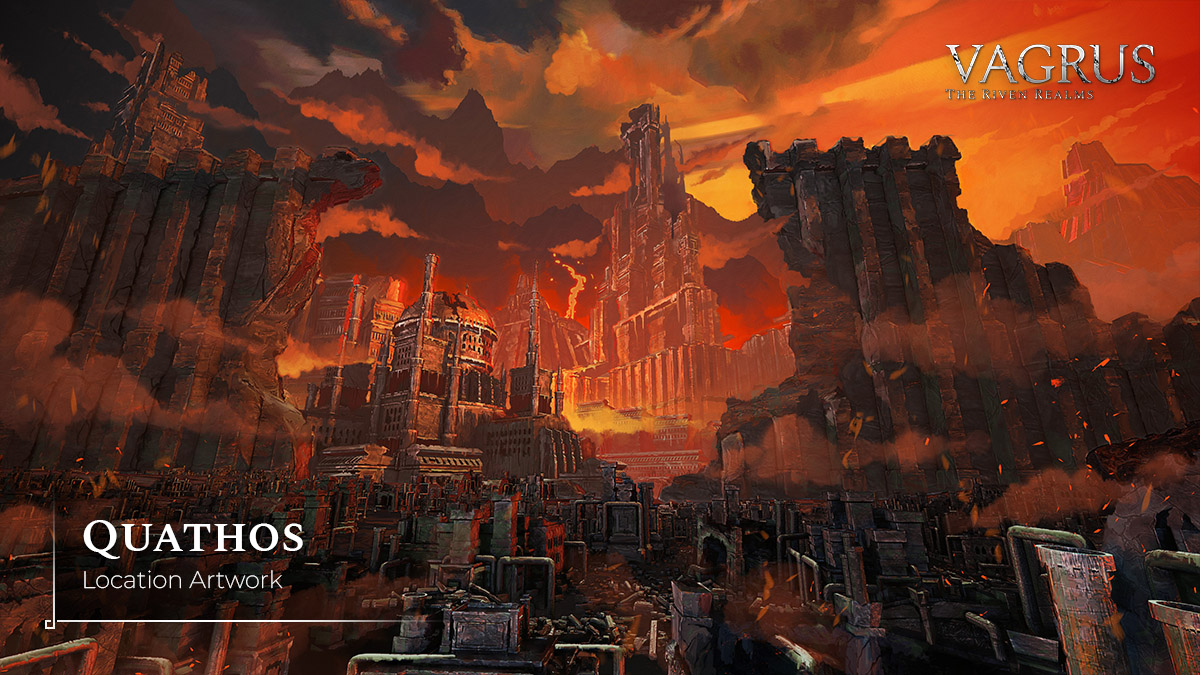
Tragically, even though some of its grandeur survives in the insanely huge, crumbling structures, Quathos is all but gone. In the present day, it is but a ruin of lava and death, a mockery of the greatness of those who came before. The few brave souls who have ventured into Quathos in the Fourth Age have returned to speak of the horrors they witnessed – and the debilitating sadness it inflicted upon them. There even exist those vagri who have dared enter its bounds and pushed past the curtain wall, a point beyond which an unrelenting heat permeates the ruined city’s every crack, crevice, and pore.
Although there is a great sadness at most of Dvendar Tharr having been lost or made uninhabitable, there exists some hope that some of it can be salvaged. The question, then, is who will be able to salvage it, and to what end? Ambitious vagri, Dwarves with a reference for their rich past, or simply craven scavengers? For those who push deeper into the heart of ruin, all shall be revealed. And with that, we must bid you farewell, for Dvendar Tharr calls to us as well. Its stories will come to life in the telling. Stay safe, stay vigilant, and conquer the wasteland!
– The Lost Pilgrims Team
Steam | GoG | Discord | Patreon | Youtube | Twitter | Facebook | Instagram
BUY NOW ON


or follow us on



 Follow the development process:



©2024 Lost Pilgrims Studio